Strategy workshop · İş Bankası
Moving a bank’s roadmap from features to outcomes
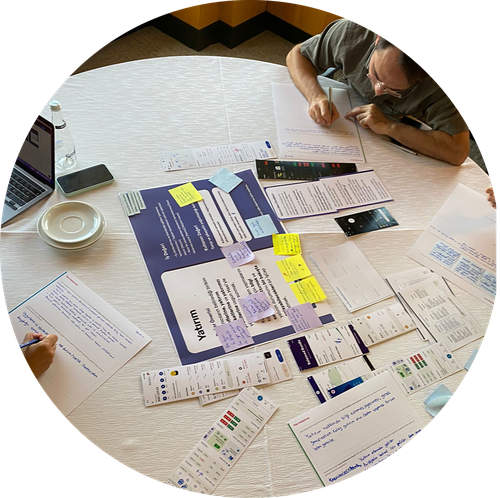
İş Bankası’s digital roadmaps were full of disconnected features, and success was measured by delivery speed. I co-led a strategy workshop with designers, product owners, developers and executives to change what the roadmap was judged on: user and business impact.

- Client
- Türkiye İş Bankası
- My role
- Co-lead and facilitator
- In the room
- UX designers, product owners, developers and executives
- Timeline
- 2022 – 2023
- Scope
- Planning, facilitation, frameworks, roadmap outcomes
The situation
Roadmaps were filled with disconnected features and lacked strategic prioritization. Success was measured by delivery speed, not by user or business impact, and teams had no shared language to evaluate ideas or tie them to long-term engagement.
How the workshop worked
I co-designed and facilitated a structured workshop in three phases, centered on shared goals and measurable impact.

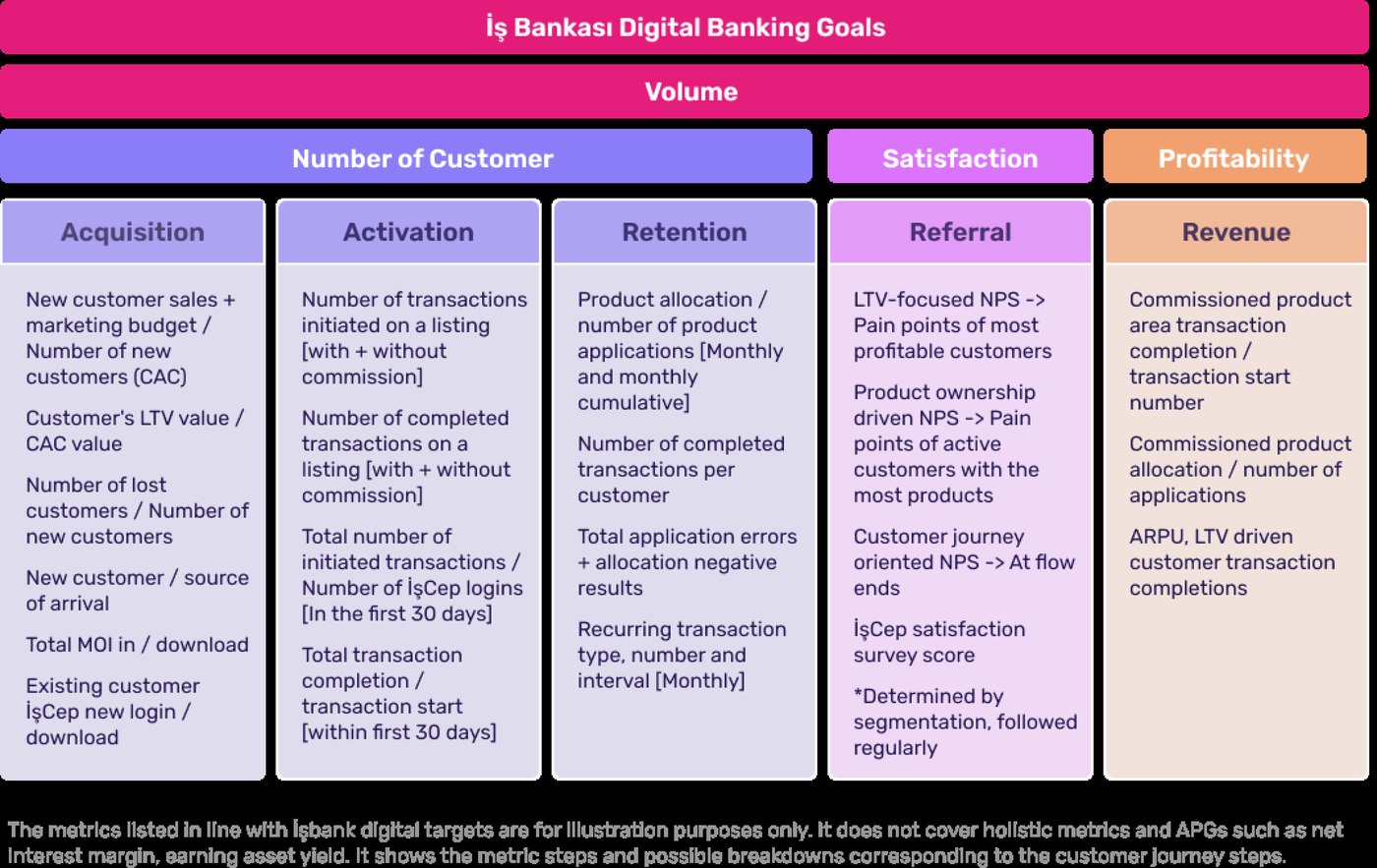
1. Goal alignment
Introduced Pirate Metrics (AARRR) so product, UX and business teams agreed on what growth success looks like.
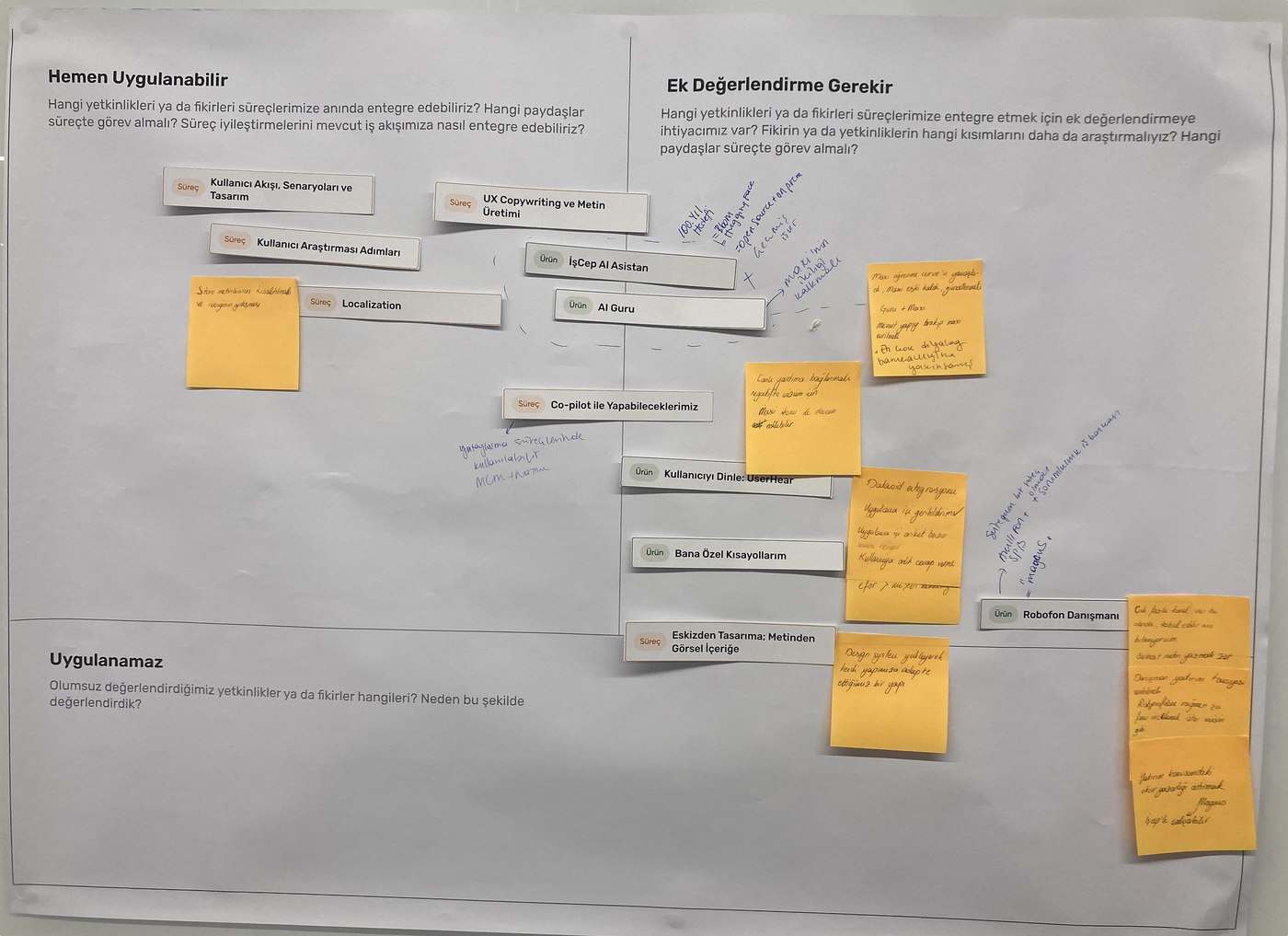
2. Impact evaluation
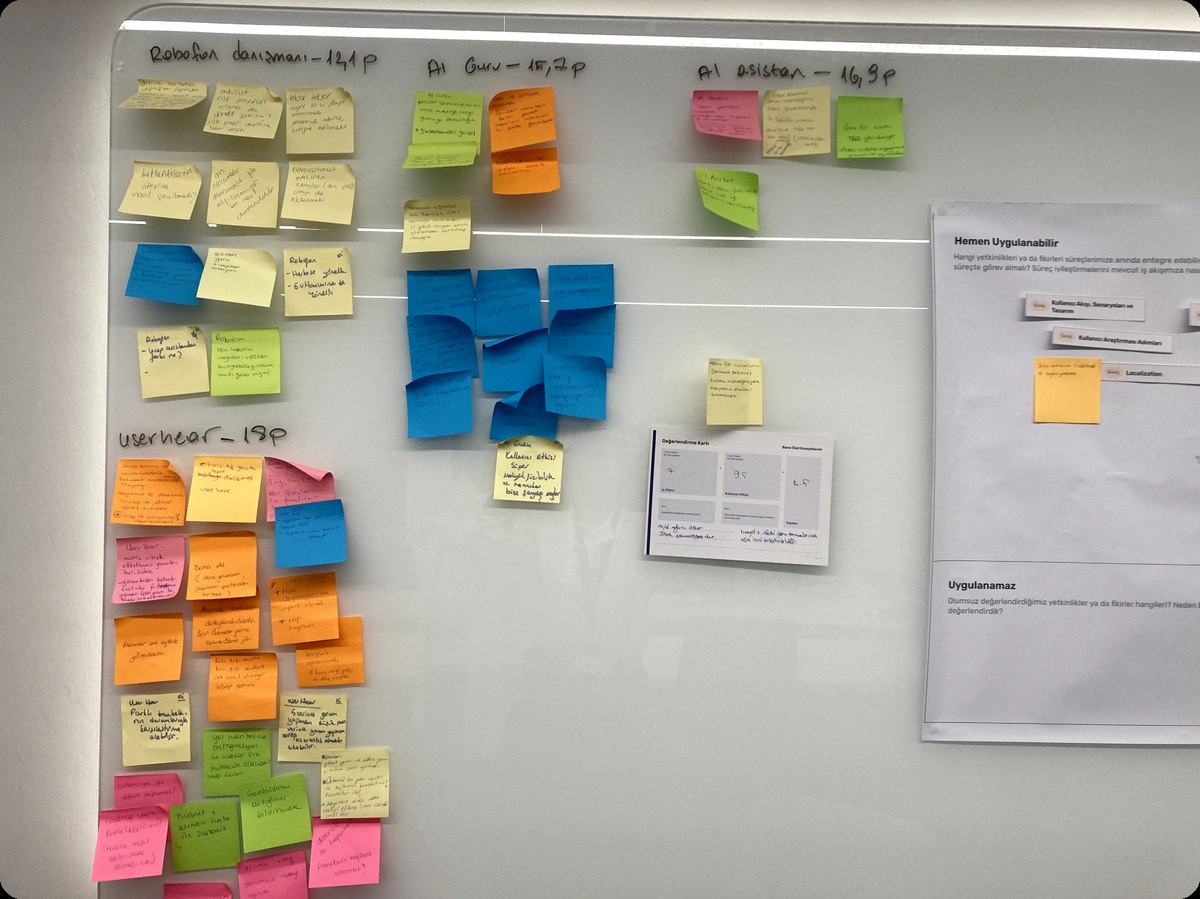
A user–business value matrix ranked every idea by user value and business value.
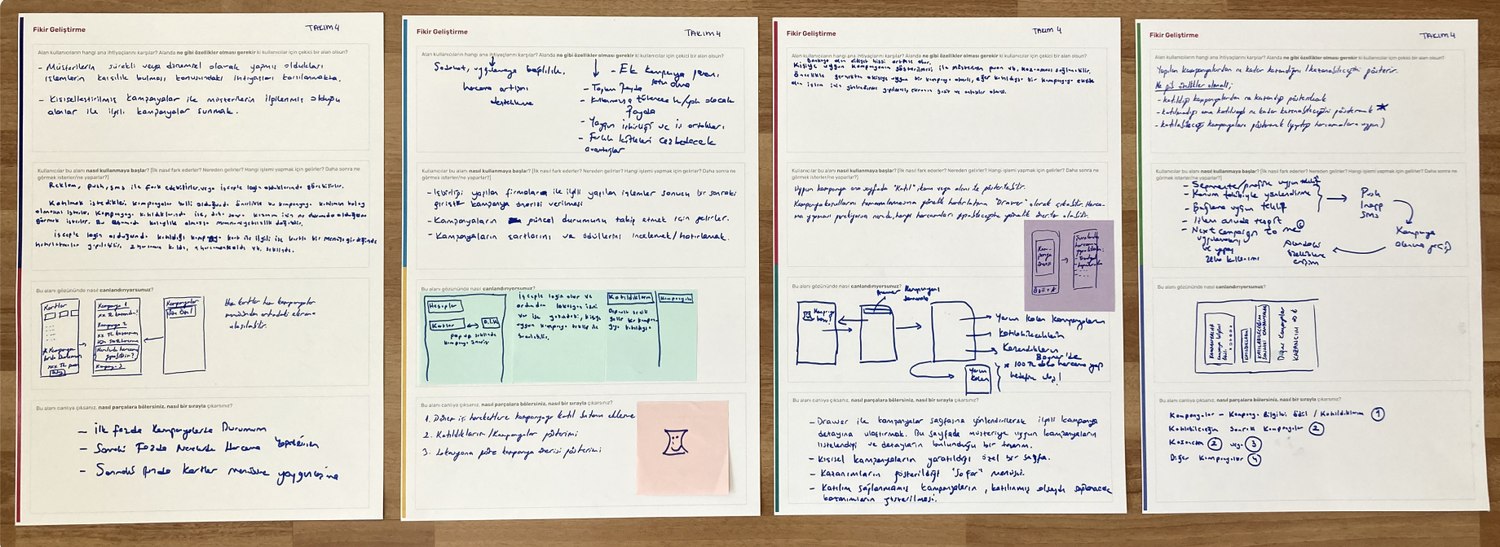
3. Scenario-based ideation
Teams mapped journeys and friction points, then turned them into concrete next steps.
The frameworks on the wall
Who was in the room
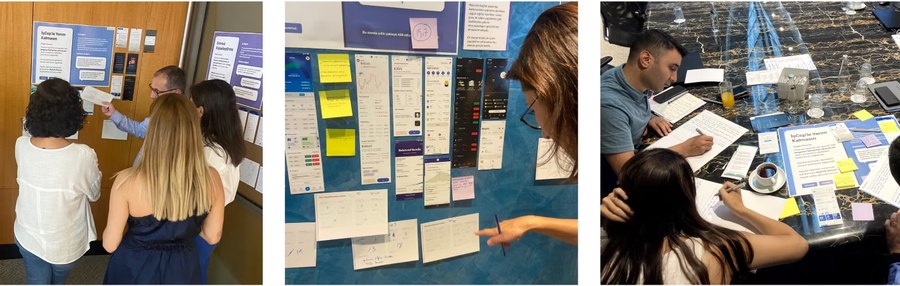
20+ people across UX, product, development and business leadership. A guided format kept participation equal: rapid ideation rounds, breakout groups by feature area, success-metric mapping, UX and technical feasibility detailing, and sprint-planning prep.
What came out of it
- Five teams agreed to judge roadmap ideas by user and business impact instead of delivery speed.
- A roadmap focused on acquisition, retention and satisfaction.
- 12 roadmap ideas, all of them built: 8 that year and the other 4 the year after.
What I learned
A shared way to score ideas mattered more than the ideas themselves. Once five teams used the same matrix, prioritizing stopped being a debate about whose feature came first.